The Hallway Is Part of the Program: Making DCOI 2026 Conversations Count
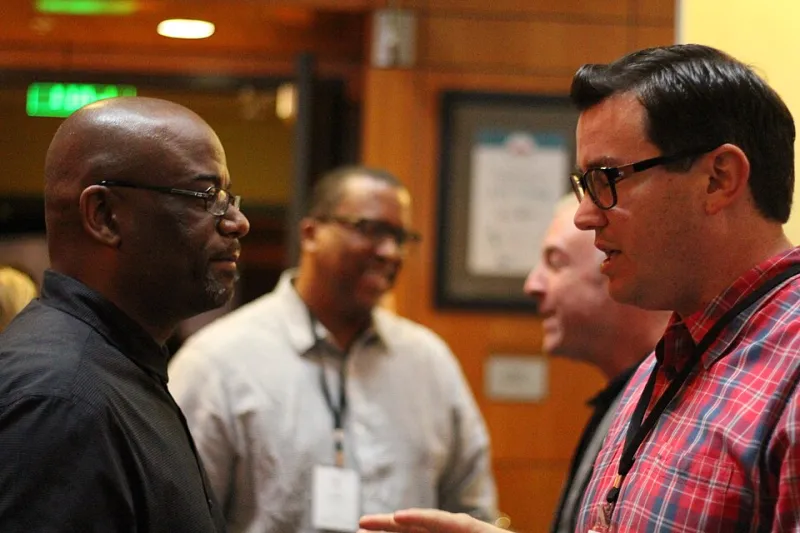
Photo: Cre8con, CC BY-SA 2.0, via Wikimedia Commons
Conference agendas are built around stages, and for good reason. Sessions provide structure, shared vocabulary, and a reason for busy people to gather in one place. But ask experienced data and technology leaders what they remember from a conference, and the answer is rarely a slide. It is the conversation after the panel, the candid aside from a peer who has already survived a migration, or the vendor-floor exchange that revealed a reference customer willing to speak plainly.
At DCOI 2026, that pattern is likely to repeat. The formal program matters. The unstructured conversation is where the program becomes useful.
Why the Between-Session Window Produces Better Evidence
A presentation has to generalize. A hallway conversation can get specific. That difference matters for data leaders evaluating architectures, governance models, hiring plans, and vendor commitments. On stage, a speaker may describe a successful platform rollout. In the hallway, a practitioner can explain what the license actually covered, how long the implementation took, and which internal team nearly blocked the project.
This is not an argument against sessions. It is an argument for treating the space between them as part of the agenda. The most valuable peer benchmarks often arrive as answers to questions no presenter can anticipate from the podium.
Arrive with Three Questions, Not a Pitch
The fastest way to ruin a useful conference conversation is to turn it into a sales pursuit. Data leaders should arrive with a small set of genuine questions. What did you retire last year? How did you measure adoption? Who owned the budget after the pilot? What would you do differently with 12 months of hindsight?
These questions work because they invite experience rather than performance. They also create reciprocity. If you want a peer to share a benchmark, be prepared to share one of your own—within the bounds of confidentiality, of course.
Use Session Exits Deliberately
When a session ends, most attendees drift toward the exit. A better tactic is to pause near the room for two or three minutes and identify one person whose question or comment suggested relevant experience. Introduce yourself with a specific reason: 'You asked about model evaluation costs—I am working through the same issue. What did your team conclude?' That is a more productive opening than a generic exchange of titles.
Two conversations of this kind per day are usually enough. The goal is not to collect contacts. It is to collect evidence.
Schedule Office Hours Instead of Meetings
Formal meetings are often too short for context and too structured for candor. Consider proposing a small office-hours table instead: three or four peers, one topic, no slides. For example, a conversation on 'what we cut after the pilot' can produce more useful detail than a vendor demo. DCOI 2026 attendees can use meal breaks, sponsor lounges, or quiet corners for these small-group exchanges.
The format matters. A circle of four invites participation. A row of seats facing a presenter recreates the stage.
Treat Vendor-Floor Conversations as Sanity Checks
The vendor floor is not only a sales environment. It is also a place to test claims against peer experience. Ask vendors for reference customers who have renewed after two years, not only for logos from initial deployments. Ask what happens at renewal, how usage is measured, and which services are excluded from the standard package.
The more useful move, however, is to compare notes with other attendees after those conversations. A vendor's answer becomes more credible when three peers describe the same implementation constraint.
Keep a Conversation Log
Unstructured conversations become forgettable without a light record. After each meaningful exchange, note the person, the question, the answer, and one follow-up. Within 48 hours, send a specific note—not a generic 'great to meet you' message. Share the document, benchmark, or introduction you promised. This is not lead generation. It is professional follow-through.
The log also helps identify patterns. If four peers mention the same hidden cost or hiring bottleneck, that pattern is more valuable than any single session summary.
The Etiquette of Peer Exchange
Networking should not become a sprint through the room. Ask permission before probing on sensitive topics such as budget, headcount, or vendor dissatisfaction. Respect a closed conversation. Avoid the assumption that every peer is a prospective customer, recruit, or partner. The best conference relationships are built on useful candor, not transactional urgency.
DCOI 2026 will offer a formal agenda worth attending. But the real agenda will also include the conversations that no program committee can schedule. The room where it happens may be a hallway, a coffee line, or a table for four. Treat it as part of the program, and the conference becomes more than a series of sessions.